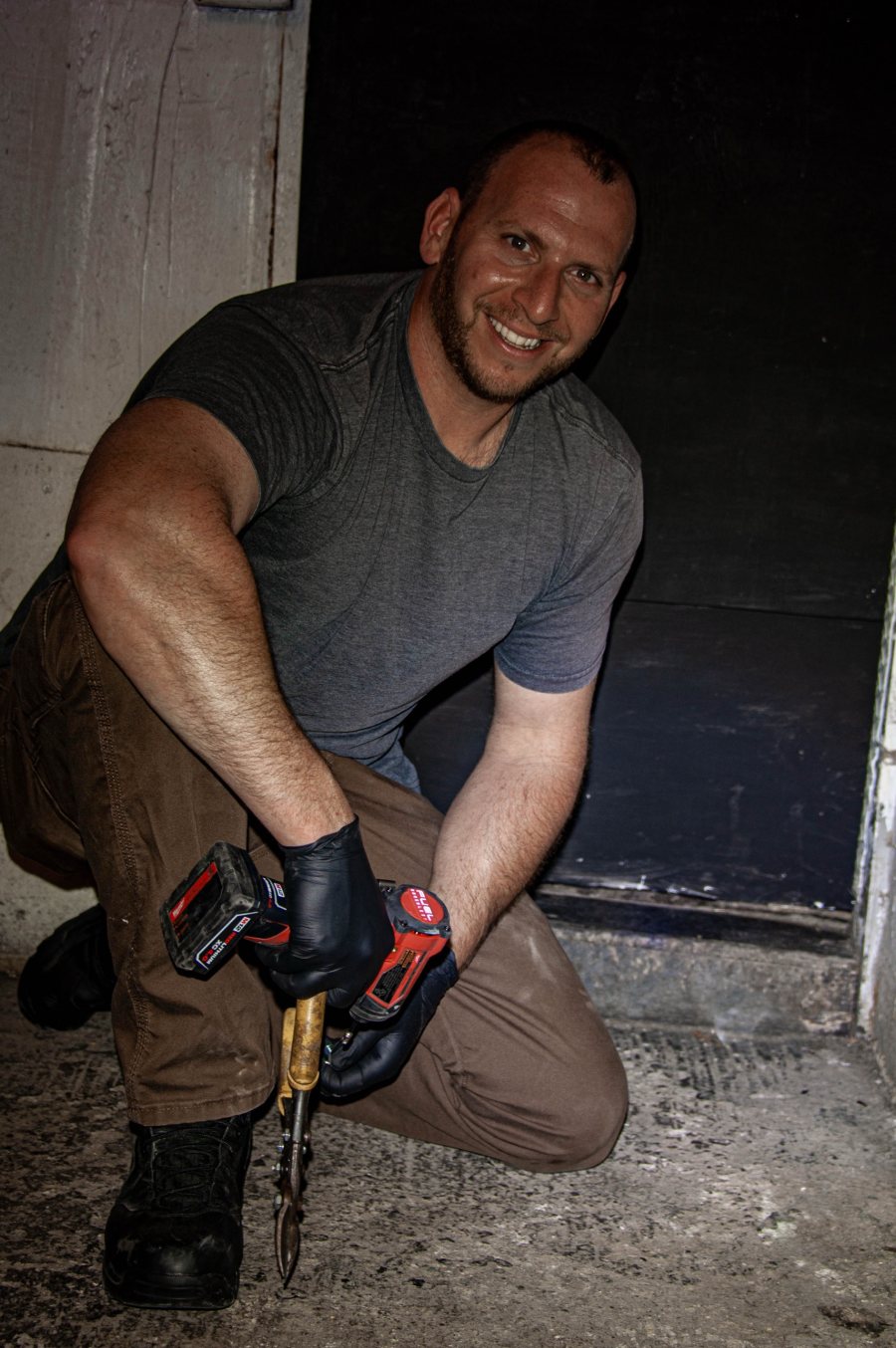
Ryan Katz is a rodent specialist. For 25 years he has worked rats and mice in the field, in every kind of building, and he is the person other pest professionals call when an account will not resolve. He teaches rodent work and structural exclusion to the industry, in the United States and abroad, and the methods he teaches are ones he developed on the job.
Exclusion is not pest control. It is a step beyond: a craft, and Ryan has honed it over decades in New York City, the most demanding rodent environment there is. Dense rat populations, century-old buildings, shared walls, and aging sewers leave no room for work that only looks finished. What holds there holds anywhere, which is why his methods carry to any building, in any city or country.
Ryan understands rodents, their biology, their tendencies, and their behavior, and he reads a building for how the animal will use it: where the plumbing and electrical run and penetrate, and how shared walls, shared spaces, and shared sewer lines connect one property to the next.
Behind that is a background in construction. He is a master builder who has been involved in large phased construction for more than two decades, so he knows how a structure is put together and how it should be closed. A builder knows how to close an opening. A rodent expert knows which openings matter, why the animal is using them, and what it will do when they are closed. Ryan is the rodent expert with the builder's background, a combination no one else in this industry offers, and it is why his exclusion plans hold where patching holes does not.
He runs the K9 team the same way. Patterdale Terriers are natural hunters, and finding and taking rats is instinct for the breed. What they need is a rodent expert to direct them, read what they find, and build the plan. A handler who knows dogs but not rats can find a burrow. A rodent expert, guided by the dogs, finds more: which burrow systems are active, how the rats travel, what feeds and shelters them. That becomes a plan that drastically reduces the population. Then the structural exclusion work closes the building so the rats cannot return, which is what solves the problem at its source. Ryan does all three.
Ryan is an invited speaker on rodent exclusion in the United States. He teaches rodent work and exclusion for ACPUB in Mexico and for the Pest Management Association of Nigeria. In Querétaro, Mexico, he helped set up and run a rodent safari that took more than 100 association members into the field to locate and take rats and mice.
He was raised in the trade and learned it from an entomologist with more than 50 years in the field. He completed coursework in entomology at Farmingdale State College and keeps current through PestWorld, the Purdue Pest Management Conference, and the Bobby Corrigan Rodent Academy. His work has covered close to every situation New York City can put in front of a technician, and he has built his own techniques on top of what he was taught.
Graduate's canine program started with an introduction. A friend and trusted colleague in the industry put Ryan in touch with Kimberly Camera. For five weeks the two had only spoken by phone. In September 2025, Ryan drove from Long Island to Tennessee and South Carolina to pick up two Patterdale Terriers, Mia and Hugo, arrived at Kim's 14-acre property late at night, and was welcomed as if they had known each other for years.
What he found there was a working canine program built with care: planned facilities, and dogs that excel at rodent detection and abatement, bed bug detection, and nuisance wildlife work. Mia and Hugo spent two months there. Ryan trained the dogs himself, with Kim's guidance along the way, and handles them on every job. Two family-owned companies working together is how a smaller firm takes on work at this level.
The reason for adding dogs is simple. An inspector reads evidence: droppings, sebum, footprints, tail drags, disturbed insulation. That works where the evidence can be seen. It does not work under dense groundcover, across a facility measured in millions of square feet, or in a yard where the burrow openings are hidden. A trained dog works by scent, so it finds what is there whether anyone can see it or not.
The jobs bear that out. In Brooklyn, the dogs found burrow systems in vegetation that people on foot could not locate. In Pennsylvania, they worked detection across 1.6 million square feet. In Dallas, Ryan and Kim were brought in to find what the operators on site could not.
Detection is where the industry is going because it answers the first question on any rodent job: where are they? Once that is known, the structural work can be put in the right place. The dog finds the problem, and the exclusion fixes it.
 Consulting · Rodent Detection · Abatement